What Age Is Best for Wisdom Teeth Removal in Oxnard CA?
Parents ask this question all the time, and adults ask it too, usually after a dull ache starts in the back of the jaw or a dentist mentions crowding on an X-ray. The short answer is that the best age for wisdom teeth removal is often the late teens to early twenties, but real life is rarely that neat. Some people benefit from earlier evaluation, some can safely wait, and some never need their wisdom teeth removed at all.
That is the part many people do not expect. There is an ideal window for many patients, but there is not a single universal age that applies to every mouth.
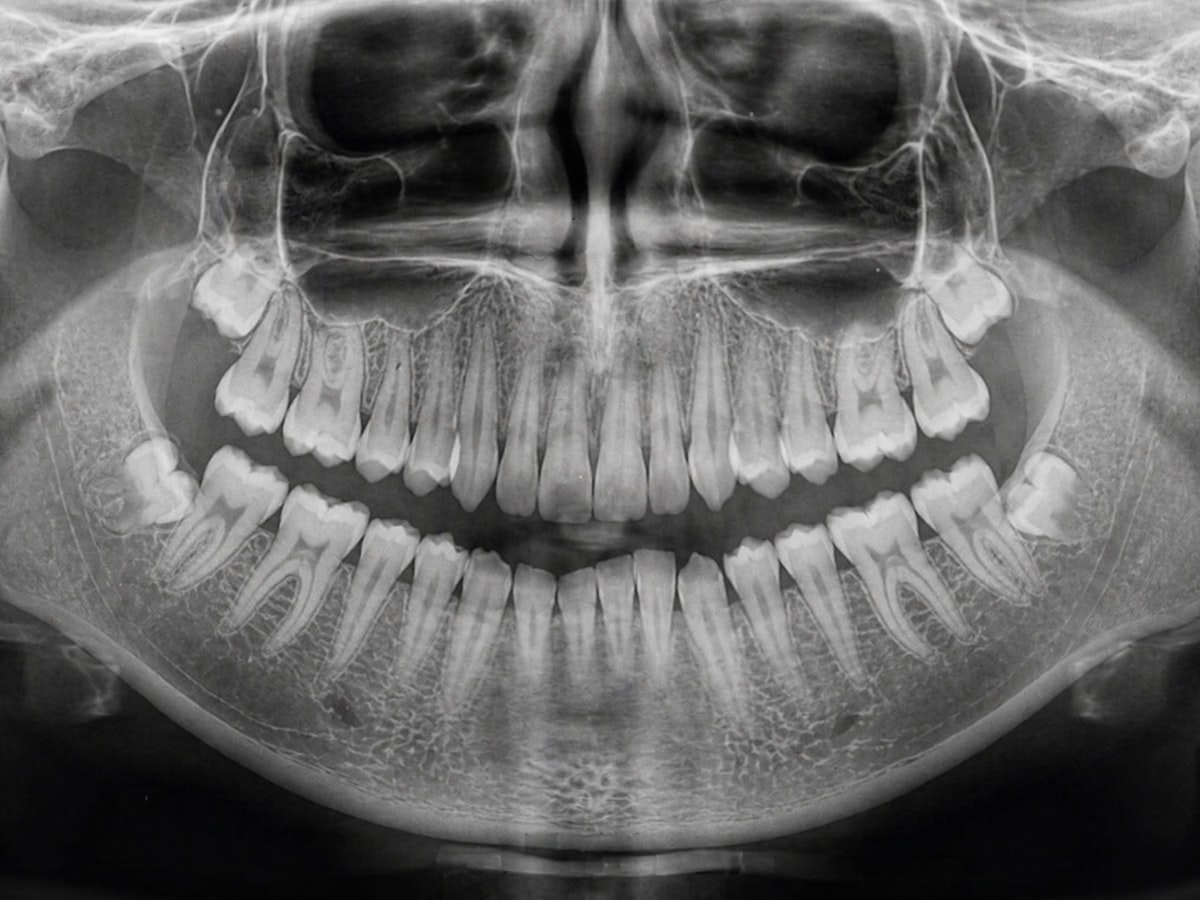
In practices that handle Wisdom Teeth Removal Oxnard CA patients often hear the same pattern: a teenager comes in with no pain, the panoramic image shows third molars developing at an angle, and the conversation turns to timing. The family wants to know whether it is better to act before problems begin or wait until there is a reason. The best answer depends on anatomy, symptoms, eruption pattern, oral hygiene, and how much room is actually available in the jaw.
Why timing matters more than a birthday
Wisdom teeth, also called third molars, usually begin to emerge sometime between the late teens and mid-twenties. The exact age varies. Some start causing trouble around 16 or 17. Others remain quiet until 25. A smaller group never erupts fully, or never develops at all.
Dentists and oral surgeons pay close attention to this period because the roots are still forming. In many younger patients, removal is technically more straightforward before the roots are fully developed and before the tooth becomes more firmly anchored in dense adult bone. Healing also tends to be easier in younger, healthy patients. Swelling still happens. Soreness still happens. But recovery is often smoother at 17 or 18 than at 37 or 48.
That does not mean every 17-year-old should schedule surgery immediately. It means the late teen years are often the right time for a careful evaluation. If the X-ray shows likely future trouble, earlier removal may save the patient from pain, infection, gum damage, or emergency treatment later. If the teeth appear well positioned and cleanable, watchful waiting may be the more sensible choice.
The key distinction is between age and development. A 19-year-old with partially impacted lower wisdom teeth and recurrent gum inflammation is in a very different situation from a 19-year-old whose wisdom teeth are upright, fully erupting, and easy to brush.
The age range many oral surgeons prefer
For many patients, somewhere between 16 and 24 is the most favorable period for evaluation and, if needed, removal. That range is broad for a reason.
At around 16 or 17, wisdom teeth may not be fully visible in the mouth, but their position can often be judged on imaging. If they are growing sideways, pressing toward second molars, or trapped under the gums, it becomes easier to predict problems before they become painful. This is often when families first hear the phrase “prophylactic removal,” meaning removal based on likely future complications rather than active disease at that moment.
By 18 to 21, many third molars declare themselves more clearly. There may be enough development to know whether eruption is going well or not. This is also a practical time in life. High school graduation, college breaks, and summer schedules often make it easier to plan recovery without disrupting work or classes too severely.
Once patients move into their mid-twenties and beyond, removal can still be very appropriate, but the trade-offs shift. Bone is often denser. Roots may be longer and more curved. If a lower wisdom tooth sits close to the inferior alveolar nerve, the surgical planning can become more nuanced. None of this means older adults should avoid treatment. It simply means timing may affect complexity and healing.
When earlier removal makes sense
Some younger patients benefit from removal before symptoms begin. That recommendation usually comes from what the clinician sees, not from routine habit.
Here are the situations that commonly push the timeline earlier:
- impacted teeth angled toward neighboring molars
- repeated gum infection around a partially erupted tooth
- decay in a wisdom tooth or the tooth in front of it
- cystic changes or damage visible on imaging
- orthodontic or bite concerns where eruption space is clearly inadequate
A good example is the teenager whose lower wisdom tooth is trapped under the gums with only a small corner peeking through. Food and bacteria collect under that gum flap, and every few months the area gets red, swollen, and hard to chew on. That is not a harmless nuisance. Repeated infection can worsen over time, and patients often end up needing antibiotics, urgent visits, or treatment at the worst possible moment, like final exams week or right before a trip.
Another common scenario involves the second molar, the tooth directly in front of the wisdom tooth. If the third molar is tipped forward, it may create a hidden cavity or a periodontal defect where brushing cannot reach. Patients are often surprised to learn that the wisdom tooth itself is not always the main problem. Sometimes the risk is the healthy tooth it threatens.
When waiting is reasonable
Not every wisdom tooth is a ticking time bomb. Some erupt normally, line up well enough to function, and can be kept clean. Others remain buried and stable without harming adjacent teeth. In those cases, monitoring can be an excellent choice.
A patient in their early twenties with symptom-free wisdom teeth and healthy surrounding tissue may be told to keep them under observation. That usually means regular exams and periodic X-rays to make sure nothing is changing quietly under the surface. Watching a tooth is not the same as ignoring it. It is an active strategy.
This is especially true if removal would be more invasive than the current situation justifies. Suppose an adult has deeply impacted wisdom teeth that have never caused symptoms, show no signs of cysts or decay, and sit close to important nerves or the sinus. The benefit of surgery may be less obvious, and careful follow-up may be the more prudent path.
That kind of judgment matters. Good oral surgery is not about removing every third molar on principle. It is about balancing future risk against current cost, complexity, and patient goals.
What changes after age 25
People often worry that they have “missed the window” once they are in their late twenties or thirties. Usually, they have not. Wisdom teeth can be removed safely well past the classic college-age years. Many adults choose treatment after finally dealing with recurring pain, infection, bad breath, food trapping, or pressure in the back of the jaw.
Still, there are practical differences worth knowing. Healing may feel slower. Swelling can linger a bit longer. Jaw stiffness may be more noticeable. If the teeth are fully impacted and the roots are close to the nerve canal or maxillary sinus, the imaging and surgical planning may need more attention. In some cases, a 3D scan is useful to understand anatomy before surgery.
The difference is often not dramatic, but it is real. A healthy 32-year-old can do very well. A healthy 45-year-old can do well too. Yet if two otherwise similar patients both clearly need removal, the one treated earlier often has the simpler course.
That is why oral surgeons tend to like early evaluation. It creates options. It allows families and adult patients to make a decision before the case becomes urgent.
Pain is not the best guide
One of the biggest misconceptions is that wisdom teeth only need treatment if they hurt. In practice, some problematic third molars stay quiet for a long time while causing slow damage. Cavities can form where patients cannot see them. Gum pockets can deepen behind second molars. Pressure and inflammation may come and go so subtly that patients write them off as “just sensitive.”
On the other hand, pain does not always mean extraction is the only answer. Sometimes the source is temporary gum irritation around a partially erupting tooth. Sometimes a nearby tooth is actually to blame. That is why imaging and a clinical exam matter so much. The goal is not just to respond to discomfort, but to understand what is happening and where it is likely to lead.
In offices handling Wisdom Teeth Removal Oxnard CA cases, this is often where reassurance helps. The discussion should not feel rushed or one-size-fits-all. A 20-year-old with no symptoms but a high-risk impaction deserves a different conversation from a 40-year-old with mild intermittent soreness and stable X-rays.
The Oxnard factor, real life scheduling and access to care
In a coastal city like Oxnard, families often make these decisions around work schedules, school breaks, sports seasons, and insurance timing as much as symptoms. That is not trivial. Recovery is easier to manage when patients can rest for several days, avoid strenuous activity, and stay close to home. For students, winter break and early summer are common windows. For working adults, a long weekend may not be enough, especially if multiple impacted teeth are being removed.
Local access matters too. Patients often do better when consultation, imaging, surgery, and follow-up are all organized clearly. The “best age” on paper means less if treatment gets delayed until an infection flares up on a Friday night. Planning ahead often reduces stress, allows for better preoperative evaluation, and gives patients time to ask questions about sedation, costs, and recovery.
What the exam is really looking for
An evaluation for wisdom teeth is not just a quick glance in the mouth. A useful consult looks at how the third molars sit in bone, whether there is enough space for eruption, how the roots are forming, and how close they are to nearby structures. For upper teeth, the relationship to the sinus can matter. For lower teeth, the nerve canal is often the key concern.
The exam also considers the patient, not just the X-ray. A teenager with excellent oral hygiene and no symptoms may tolerate observation better than someone with a history of repeated inflammation and difficulty cleaning the area. A patient with braces or a retainer may have different priorities than someone who has no orthodontic concerns. A patient heading off to college in two months may choose a different timeline than someone starting a physically demanding new job next week.
Clinical judgment is built from those details. That is why blanket advice from friends or social media often misses the mark. One person’s smooth experience at 18 does not prove that everyone should do the same. One cousin’s difficult recovery at 30 does not mean waiting is always a mistake.
The question parents usually ask next
Once families hear that late teens to early twenties is often the sweet spot, the next question is usually whether 15 is too young or 27 is too old.
Fifteen can be too early for surgery in some cases if the teeth are still developing and there is not enough information to predict their path confidently. But it is not too early for evaluation. Many orthodontists and general dentists first spot third molar concerns around that age. A baseline image can be very helpful.
Twenty-seven is not too old. Many patients have removal around that age, especially if symptoms have started or if the dentist notices damage during routine care. The point is not perfection. The point is making a good decision with the information available.
Signs that suggest it is time to stop watching and start planning
Patients who are on the fence often want a practical way to know whether observation is still safe. A few changes usually push things out of the “wait and see” category and into active planning:
- swelling or tenderness behind the back molars that keeps returning
- food trapping or a bad taste coming from the area
- cavities, gum pockets, or bone loss seen on X-rays
- pressure against the second molar or signs of resorption
- headaches or jaw soreness tied to repeated flare-ups in the same spot
None of these automatically means emergency surgery tomorrow, but they do mean the situation deserves timely attention.
What recovery tends to look like at different ages
Younger patients often bounce back quickly, but it helps to keep expectations realistic. Even for a healthy 18-year-old, wisdom tooth recovery usually involves a few days of soreness, swelling, a modified diet, and limited activity. Most people feel meaningfully better within several days, though full tissue healing takes longer.
Adults in their late twenties, thirties, or beyond may notice more stiffness and a slower return to normal chewing. That does not make the surgery a bad idea. It simply changes the planning. Adults benefit from setting aside enough recovery time, following postoperative instructions carefully, and not underestimating hydration, rest, and pain control.
Dry socket, while not inevitable, is another reason careful aftercare matters. It can occur at any age, but smoking, vigorous rinsing too soon, and certain healing patterns can increase the risk. Older age alone does not guarantee complications, yet younger tissue generally tends to rebound a bit more readily.
Sedation, anxiety, and patient comfort
Age is not the only factor in choosing the right time. Anxiety matters too. Some teenagers are calm and practical. Some adults are deeply nervous and postpone treatment for years because they dread the procedure. That delay can turn a manageable case into a more uncomfortable one.
A thoughtful consultation should address this directly. Patients need to understand whether local anesthesia alone is enough, whether oral medication or IV sedation is appropriate, and what the logistics are for the day of surgery. Many people feel much better once they know what to expect. Fear often grows in the absence of specifics.
This is one reason early consultation helps, even if surgery is not scheduled immediately. Patients can digest the information, compare options, and choose timing from a place of clarity rather than panic.
The rare case where wisdom teeth stay put for life
It does happen. Some people reach their forties, fifties, or older with wisdom teeth that never caused trouble. If those teeth are healthy, accessible for cleaning, and not damaging surrounding structures, there may be no reason to remove them just because of age.
That point deserves emphasis because patients often assume the answer must be removal no matter what. Not necessarily. Some third molars are useful teeth. Some are harmless bystanders. Others are future problems waiting for the right moment. Distinguishing among those groups is the heart of good treatment planning.
So what age is best?
For many people, the best age for wisdom teeth removal is somewhere in the late teens to early twenties, often before the roots have fully matured and before recurrent infections or damage develop. That is the window where surgery is frequently easier and healing is often more predictable.
But the best age for you or your child depends on whether https://emilianonmqv660.oakridgedigest.com/posts/how-wisdom-teeth-removal-in-oxnard-ca-can-prevent-future-dental-issues the teeth are impacted, whether they can erupt normally, whether they are already harming nearby teeth or gums, and whether the patient’s overall health and schedule support treatment. A 17-year-old may be ready now. A 22-year-old may be fine to monitor. A 31-year-old may have every reason to go ahead if symptoms or X-rays point that way.
For anyone considering Wisdom Teeth Removal Oxnard CA, the most useful next step is not guessing based on age alone. It is getting a proper exam and imaging review from a dentist or oral surgeon who can explain the anatomy, the risks of waiting, and the pros and cons of treatment now versus later. Timing matters, but informed timing matters more.
Oxnard Dentistry
1730 E Gonzales Rd
Oxnard, CA 93036, United States
Phone: +1 805-307-8731
FAQ About Wisdom Teeth Removal Oxnard CA
How much does it cost to get wisdom teeth removed in California?
Fees depend on tooth position, the number of extractions, imaging and anesthesia. Oxnard Dentistry can provide an individual estimate after examining your teeth. Ask for an itemized plan and confirm insurance benefits before scheduling.
Will insurance cover wisdom teeth removal?
Coverage and out-of-pocket costs vary by policy and the treatment required. Ask the dental office and your insurer to verify benefits, annual limits and any authorization requirements. A benefit estimate does not guarantee payment.
Is 30 too old to have wisdom teeth removed?
Age alone does not determine whether extraction is appropriate. A dentist evaluates symptoms, tooth position, oral health and medical history. Healthy, functional wisdom teeth may be monitored; teeth causing disease or other problems may need treatment.